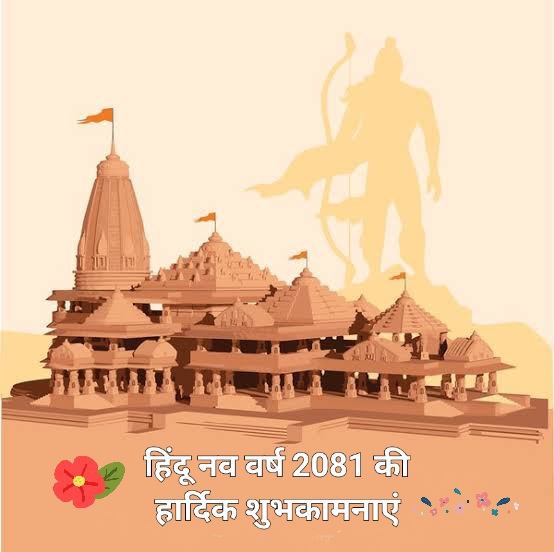
April 9, 2024, marks the beginning of the Hindu New Year 2081. The Vikram Samvat calendar traces its origin to 57 BCE under the reign of King Vikramaditya. This year, designated as 2081 in the Hindu calendar, signifies the commencement of new beginnings and cultural festivities.
Traditionally, the Hindu New Year unfolds within the first half of April. For adherents of the Lunar calendar, the month of Chaitra, spanning March to April, heralds the advent of the new year. Celebrations manifest on the inaugural day of this month, observed as Ugadi in Andhra Pradesh, Telangana, Karnataka, and Gudhi Padwa in Maharashtra.
Diverging from the Gregorian calendar’s approach of adding extra days to synchronize lunar and solar cycles, the Hindu calendar preserves lunar month integrity. To harmonize festivals and agricultural rituals with the seasons, an additional full month is interjected approximately every 32–33 months.
Dating back to Vedic antiquity, Hindu calendars have endured as fundamental timekeeping tools, shaping religious observances and festival schedules globally. Early Buddhist communities in India adopted these calendars, fostering a lunar-based festival scheduling tradition.
Beyond its calendrical significance, the Hindu calendar underpins astrological practices and the observance of auspicious occasions, including rituals and fasting periods such as Ekadashi.
Rooted in Vedic wisdom, the Hindu tradition boasts a nuanced understanding of timekeeping, as elucidated in ancient texts like the Kaushitaki Brahmana, which expounds on the cyclical movement of the Sun between northern and southern latitudes over six-month intervals.
Time keeping
[The current year] minus one,
multiplied by twelve,
multiplied by two,
added to the elapsed [half months of current year],
increased by two for every sixty [in the sun],
is the quantity of half-months.— Rigveda Jyotisha-vedanga 4
 Sanatan Mission
Leave a comment